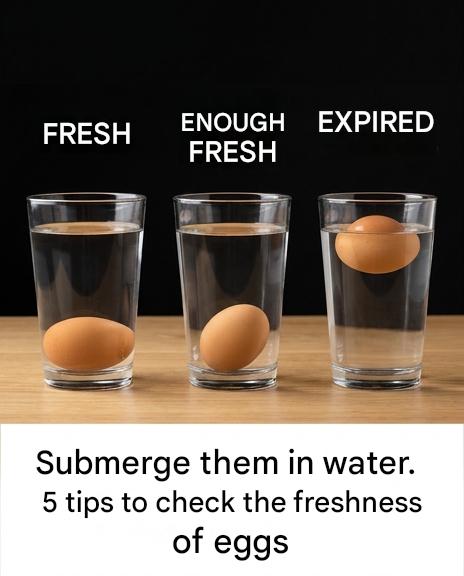

If you crack an egg onto a plate, you can observe its texture.
- A fresh egg has:
A nice, plump yellow
- A thick white that remains around the yellow
A less fresh egg has:
- A flatter yellow
- A very runny white that spreads easily.
This happens because the natural structure of the egg changes over time: the older the egg gets, the more liquid it becomes.
Shake the egg to check if it’s still good
This trick is little known but very effective. Hold the egg near your ear and shake it gently.
If you hear nothing: the egg is fresh.
If you hear a sloshing sound: it’s not very fresh anymore.
Over time, the air bubble inside grows, allowing the liquid to move and produce a noise.
The table rotation test
Place the egg on a table and spin it quickly with your hand.
A fresh egg spins with difficulty and stops quickly.
An older egg spins more easily and for longer.
Why? Because the inside of a fresh egg is denser and slows down the movement.
Bonus tip:
A hard-boiled egg turns very easily, unlike a raw egg. This is handy for not mixing them up in the refrigerator.

