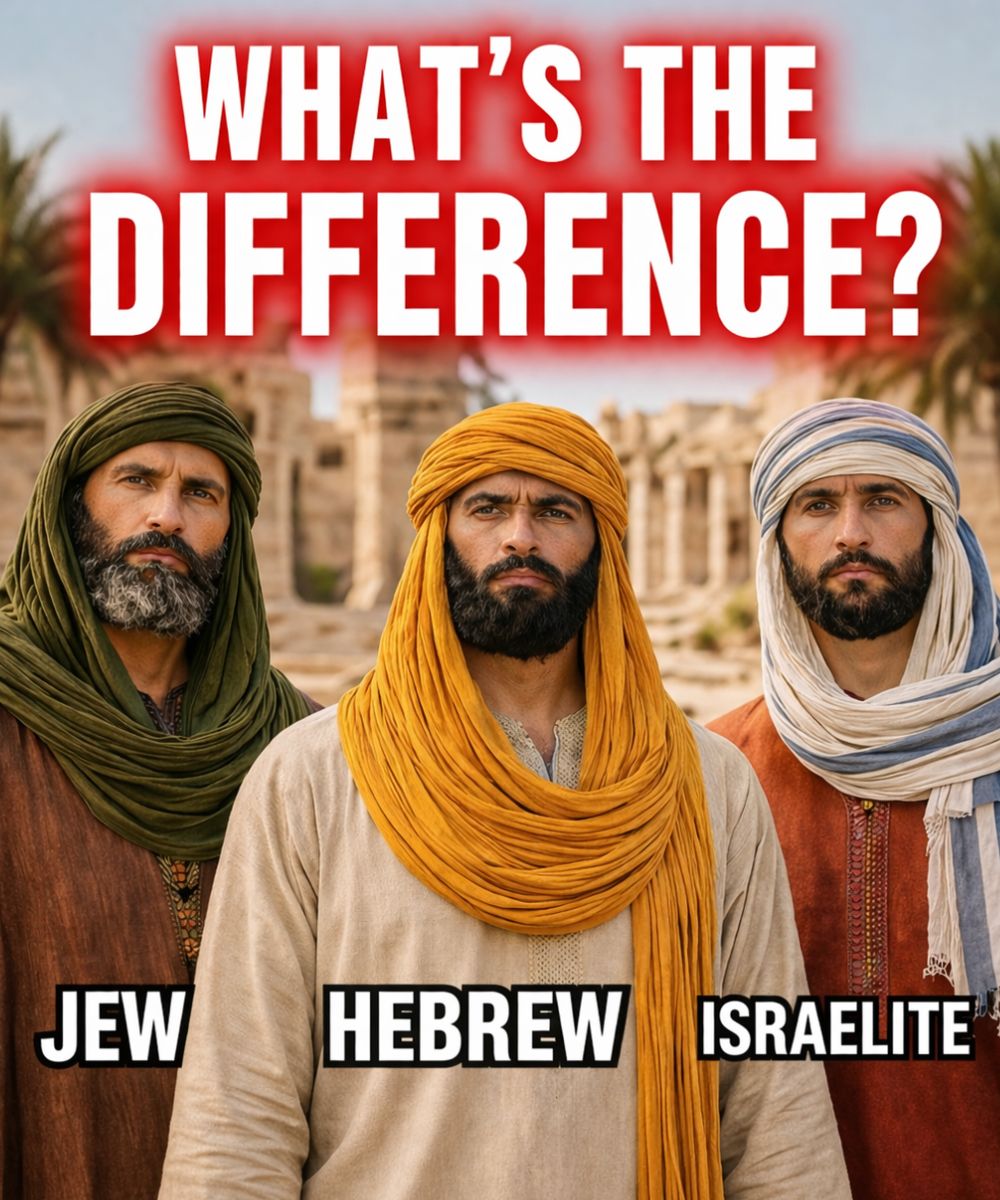
Throughout the Bible, three terms often get mixed up: Hebrews, Israelites, and Jews. While they all refer to the same people, they describe different stages in their history and carry distinct meanings.
Understanding these differences helps clarify many biblical passages and gives a clearer picture of how God’s people evolved over time.
Hebrews: the beginning
The term “Hebrew” is the earliest and is first linked to Abraham.
It comes from the word Ivri, meaning “one who crosses over” or “from the other side.” This reflects Abraham’s journey when he left his homeland and crossed the Euphrates in response to God’s call.
Being a Hebrew wasn’t just about ancestry—it described a way of life:
- A foreigner or traveler
- Without a permanent homeland
- Living by faith and God’s promises
This identity continued through his descendants—Isaac, Jacob, and Joseph. Even in Egypt, they were called Hebrews, especially when they lived as outsiders and later as slaves.
In short, “Hebrew” refers to the origin and wandering identity of the people.
Israelites: a covenant nation
The term “Israelites” came later and is connected to Jacob, who was renamed Israel after his encounter with God. His descendants became known as the “children of Israel.”
This marked a major shift:
- They were no longer just a family
- They became a structured nation
- They were united by a covenant with God
This covenant was firmly established at Mount Sinai after the Exodus, when they received the law and a shared spiritual identity.
Israelites were:
Descendants of the twelve tribes
God’s chosen people under a covenant
A nation with purpose and direction
It’s important to note:
All Israelites are Hebrews, but not all Hebrews are Israelites.
For example, descendants of Esau came from Abraham but were not Israelites because they didn’t come from Jacob.

